Thanksgiving: 10 Life-Changing Benefits of Counting Your Blessings

By Author Denise Turney

cup of aromatic cappuccino with thank you words on foam
Photo by wewe yang on Pexels.com

In a world that focuses on what’s missing — the next professional goal, the next financial gain, the next big thing — it’s easy to overlook what you already have. However, one of the most transformative practices available to you at any time and anywhere, is counting your blessings. Appreciation is free, doesn’t cost a thing, but it can change everything — your mindset, relationships, health, and your future.

Below are ten powerful benefits of counting your blessings, and how counting your blessings can shift your life from merely surviving to thriving.


1. Gratitude Lifts Your Mood

It’s real hard to feel sad or anxious while also feeling genuinely grateful. When you count your blessings — whether it’s a loving family, food to eat, a roof over your head, a job you love or a kind friend — you signal to your brain that life is good. Research shows that gratitude increases serotonin and dopamine, the “feel-good” neurotransmitters that boost happiness, contentment and help calm the mind.

By pausing to recognize what’s going well, you shift your focus from problems to possibilities. Over time, this habit can rewire your brain to naturally notice the good more often than the bad.


2. It Reduces Stress and Anxiety

Stress often comes from dwelling on what could go wrong or what you perceive as lacking. Counting your blessings helps quiet that mental noise. When you focus on what’s working, you anchor yourself in the present moment — the only place where peace truly exists.

Try this: the next time you feel overwhelmed, take four deep breaths and name three things you’re grateful for. This quick mental reset can lower your heart rate, calm your nerves, and remind you that you have more support and strength than you may realize.


3. It Improves Physical Health

Gratitude isn’t just good for your heart metaphorically; it’s good for it physically. Studies have shown that people who practice gratitude regularly tend to exercise more, sleep better, and experience fewer aches and pains.

When you appreciate your body and all it allows you to do, you’re more likely to take care of it, to nourish it with better food, rest, and movement. Counting your blessings can literally add healthy years to your life.


4. It Strengthens Relationships

Everyone wants to feel seen and appreciated. When you make a habit of expressing gratitude, whether you express appreciation to your partner, friend, co-worker, or relative, it strengthens your connection with that person.

Thanking someone for their kindness, time, or support builds trust and positive emotion between you. It also deepens empathy and reminds you that love, not perfection, is what truly holds relationships together.

Even in tough moments, pausing to remember what you love about someone can help you respond with more patience and understanding.


5. It Boosts Resilience During Hard Times

Life can be unpredictable, and everyone faces seasons of loss, pain, or uncertainty. But gratitude acts like an inner anchor. When storms hit, counting your blessings helps you focus on what remains rather than solely on what’s been taken away.

Gratitude doesn’t deny hardship — it gives you strength to walk through it. People who count their blessings regularly tend to bounce back faster from setbacks because they view challenges as temporary and growth-producing.

In other words, gratitude helps you see not just the wound, but also the lesson gained from an experience.


6. It Encourages a Growth Mindset

When you’re grateful, you begin to see life as happening for you, not to you. Even failures and frustrations become opportunities to learn and evolve.

Counting your blessings helps you adopt a “growth mindset” — a belief that every experience, even the painful ones, can teach you something valuable. This mindset leads to greater creativity, confidence, and persistence.

Gratitude transforms obstacles into stepping stones, turning what once felt like setbacks into setups for something better.


7. It Helps You Sleep Better

A restless mind rarely sleeps soundly. But reflecting on your blessings before bed can quiet your thoughts and invite calmness.

Instead of replaying worries from the day, try writing down three good things that happened, even small things. This simple bedtime ritual can help your body relax, your mind settle, and your heart find peace.

People who practice daily appreciation tend to fall asleep faster, sleep longer, and wake up feeling more refreshed. Gratitude is, quite literally, a good night’s rest in action.


8. It Cultivates a Positive Outlook

The more you count your blessings, the more blessings you’ll find. It’s not magic; it’s mindset.

Gratitude helps you interpret the world through a lens of abundance rather than scarcity. Instead of fixating on what’s wrong, you notice what’s right, the beauty in small things, the goodness in people, and the hope in difficult moments.

This positive outlook doesn’t just make you happier; it attracts more goodness into your life. People who radiate gratitude often find that opportunities, kindness, and joy seem to meet them halfway.


9. It Makes You More Compassionate

When you recognize how much you’ve been given — from the breath in your lungs to the love in your life — you naturally want to give back. Gratitude softens judgment and opens your heart to others’ struggles.

Counting your blessings reminds you that everyone is fighting their own battles, and that kindness costs nothing. It can inspire you to help, forgive, and connect in ways that make the world gentler.

In this way, gratitude becomes a quiet but powerful act of service — one that ripples far beyond your own life.


10. It Increases Life Satisfaction

At its core, gratitude is the art of being content. It teaches you to find joy in what you have while still reaching for what’s next.

When you count your blessings, you’re not ignoring ambition; you’re anchoring it in appreciation. You stop chasing happiness “someday” and start experiencing it today.

Grateful people are often more optimistic, more generous, and more fulfilled, not because they have more, but because they see more goodness. Life satisfaction grows when you realize that the ordinary moments — laughter with a friend, a sunrise, a warm meal — are anything but ordinary.


Bringing Gratitude into Your Everyday Life

Counting your blessings doesn’t have to be complicated. Here are a few simple ways to weave gratitude into your daily rhythm:

  • Keep a gratitude journal. Write down three blessings each day, big or small.
  • Say thank you often. Express appreciation to people in your life regularly.
  • Pause before meals. Take a moment to appreciate the nourishment before you.
  • Reflect before bed. End your day with gratitude for what went well.
  • Practice presence. Notice beauty in everyday details — sunlight, laughter, breath.

Like any habit, gratitude grows stronger with consistency. The more you practice, the more natural it becomes, until counting your blessings feels as effortless as breathing.


Final Thoughts

Counting your blessings doesn’t mean your life is perfect. It means you’re choosing to focus on what’s good, right here and right now. Gratitude doesn’t erase pain, but it transforms it, from bitterness into perspective, from lack into abundance, from struggle into strength.

So, start today. Name one thing you’re grateful for. Then another. And another. Watch how this simple practice opens your heart, lifts your spirit, and transforms your life — one blessing at a time.

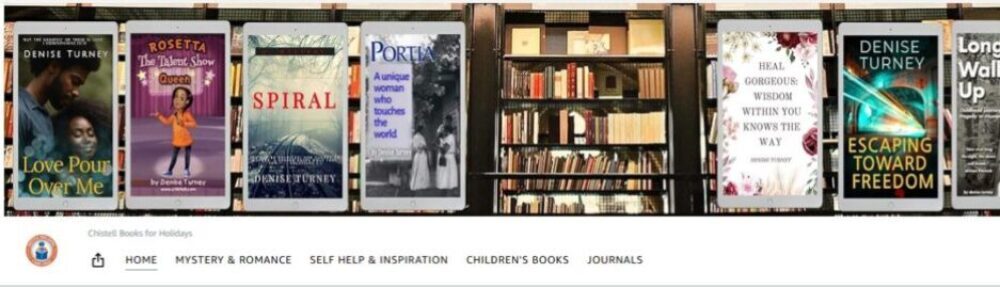
Looking for support on your life journey? Consider Heal Gorgeous: Wisdom Within Knows The Way, a book of short snippets and poetic writings that stir the truth within, encouraging awakening.

Is Death Real? What Happens After We Die?

By Books Author Denise Turney

Billions of people may have wondered what happens after we die. Only a few who are still here truly know the answer . . . perhaps. As it stands, the only people who might know what happens after we die are those who have had a near death experience. Everyone else is either guessing or relying on information they read in a book, not actual experience.

What Happens After We Die

Yet, it’s a question that fills head space, particularly when an event occurs that makes you think your exit date is near. If what those who’ve had a near death experience share is accurate, when you leave this world, you could see a tunnel of light. Or you might see someone you were close to who “crossed over” before you did.

There have also been reports of people leaving their body and watching what happens to their body. They might watch a surgeon try to revive them or they might hear nurses talking in a hospital room their body occupies.

Admittedly, hearing these stories is comforting. However, if you haven’t had a near death experience, you probably don’t feel the power that’s linked to the experiences. But is having a near death experience the only way to know what happens after we die?

Even more, is death real?

Are You Curious?

When I was a kid, I felt afraid that people I was close to who exited the world would come back as ghosts. Although I didn’t know how to express it, I had an idea of what happens after we die, even if I was wrong.

You probably have an idea of what happens after we die too. At the least, you’re curious.

That curiosity might diminish if you opened your laptop or smartphone and saw that you had an email or text message from someone you were close to who had transitioned. You’d also probably be shocked, disbelieving what was happening.

Or perhaps you’d asked a departed loved one to offer you guidance or comfort and, within seconds, the guidance or comfort appeared. What would you do if that happened to you? Would you hurry to a phone and call a friend, bringing them into the experience, desperately hoping that they would offer you clarity or understanding?

Experiences that Might Help Answer Where Do We Go When We Die

This happened to me after someone close to me transitioned. Deep in grief, I asked the person to let me know that he could see me and was with me. As I walked outside, trying to stay mentally healthy, I felt something bump my elbow. Out popped my wallet.

It landed on the ground. As I leaned over to pick up my wallet, I noticed that it had popped open to the person’s picture. The experience didn’t offer sustaining comfort, but it did make me think (as I had done since childhood) that death isn’t real.

In other words, we don’t cease to exist – ever.

Other experiences have deepened my belief that death isn’t real. It’s especially not real if what we really are has nothing to do with a body.

Yet, that doesn’t answer where do we go when we die (or put another way, leave this world)? Is the next step part of a continuation, a journey that never ends?

And is it possible to revisit the world after you exit your body? If you could, would you want to come back? Supposing you had unresolved events that had left a strong imprint on your mind while you were here, you might try to communicate with someone, hoping that they could work with you to resolve the issues.

Spiral Probes Where Do We Go When We Die

This is what happens in Spiral, a book that examines, in part, what happens to five people, two still on this side; one of them goes missing. Two more of them are funeralized, but are they really gone?

The girl who’s open to communicating with the people who transitioned holds a key. Based on stories I’ve heard on TV and read in print media, those who are open to these communications in a healthy way can bring resolution and comfort to those wondering where do we go when we die.

Another gift they bring is closure to issues someone who transitioned was unable to resolve while still in their body, which brings us back to the original questions. If a girl with uncommon insight can resolve an issue using guidance she receives from someone on the other side, is death real?

And if those who have transitioned communicate in loving ways with those still in the world, do we go into a state of peace when we leave here? If our lives continue, can we gain access to light and peace by always choosing love?

These and other questions are raised for readers in Spiral, a paranormal mystery.

The Mysteries of Life: Exploring What Lies Beyond Understanding

By Books Author Denise Turney

mysteries of life
Photo by nicollazzi xiong on Pexels.com

You’re not alone if you’ve wondered what life is for . . .  what’s the purpose of life. Another area where you’d have plenty of company is pondering what’s behind all that you see, feel, perceive, believe and experience. In fact, there might not be a person who hasn’t tried to answer those questions.

In a nutshell, if you’ve been in this world a few decades, you may have noticed that life is full of questions that stir your heart, awakens your imagination, and invites you to wonder even more. From the moment you opened your eyes as a newborn baby, you were met with perceptions, emotions and experiences that piqued your interest, that resist neat explanations. Furthermore, no matter how advanced our science becomes or how many philosophies we explore, the greatest truths often remain hidden, at best teasing us with glimpses of what’s going on behind the scenes.

As much as you may want it to be, life is not neat and fully predictable as Petula Abebe discovers as she sets out on vacation – something millions of people gift themselves with every year. Accepting life’s unknowns may help you to harvest more fulfilling experiences, steering you away from feeling “stuck” due to the simple fact that you resist change if you can’t control outcomes which leads to another key point as it regards the mysteries of life.

The temptation to control outcomes could be a symptom of fear, the thing that plugs up life’s goodness. Instead of getting stuck or turning your back on life’s goodness, consider stirring up your courage and taking smart risks. When life’s mysteries show up, accept that the mysteries might be invitations to look deeper, to expand your understanding, and to appreciate the beauty of not knowing everything. Additionally, you could appreciate that life’s mysteries connect you to others across time, culture, and belief. They remind you that every human being shares a common curiosity about existence itself.

In this article, we’ll explore some of life’s most compelling mysteries—the ones that continue to captivate scientists, spiritual seekers, and everyday dreamers alike – perhaps you.


1. The Mystery of Existence

Perhaps the most profound question is: Why is there something rather than nothing?

Philosophers have debated this for centuries. Scientists study the origins of the universe, tracing back to the Big Bang. Yet even the Big Bang doesn’t answer the ultimate question of why existence itself emerged. Why should the universe exist at all?

Religious and spiritual traditions often frame existence as a gift, an expression of divine will, or the unfolding of cosmic consciousness. But even these answers leave us with many mysteries. However, you look at it, you and everything part of all that exist is a wonder – an amazing wonder.


2. The Mystery of Consciousness

Humans experience consciousness intimately through thoughts, emotions, dreams, and a sense of self. But what exactly is consciousness? How do physical processes in the brain create subjective experience?

Neuroscientists have mapped brain activity with incredible precision, yet the “hard problem of consciousness,” as philosopher David Chalmers calls it, persists. Some theories suggest that consciousness is simply an emergent property of complex brain networks. Others propose it as a fundamental feature of reality itself, woven into the fabric of the universe.

Others trying to answer the mysteries of life describe consciousness as a doorway into unity with the divine. Whatever its source, consciousness may be the greatest mystery of all—because it is both the lens through which we perceive life and a phenomenon we can never fully step outside to observe.


3. The Mystery of Love

Love is universal, yet it defies explanation. You can study love, even tracing hormones like dopamine that fire when you bond with others. And you can analyze love’s social function, noting how love builds families, strengthens communities, and ensures human survival.

Yet, love is more than biology or survival. Love inspires communication and acts of profound courage. It moves people to create art, endure hardship, and even risk their lives for others. Love’s mystery lies in its ability to transcend logic, to connect us to one another in ways that feel eternal.

Every culture has stories and songs about love. Some describe it as destiny, others as divine, and others still as the greatest power in existence. What is certain is that love continues to remind us of our capacity for connection and meaning.


4. The Mystery of Death

Death appears to be one of this world’s certainties, yet it remains a great mystery. Have you ever wondered what happens when you take your last breath? As humans, do we dissolve into nothingness or does some part of us continue beyond the physical body?

Different traditions offer different answers. Some promise heaven, hell, or reincarnation. Others see death as a return to universal consciousness. Science, meanwhile, observes the shutting down of the body’s systems but has no definitive explanation for what happens to consciousness when the brain dies.

Near-death experiences, reported across cultures, suggest glimpses of light, peace, or even reunions with departed loved ones. Skeptics explain these experiences as brain activity under duress. Believers see them as windows into what lies beyond. What do you believe?


5. The Mystery of Intuition

Before you reached your teenage years, you might have had moments of “knowing” something without evidence—an inner voice that guided you toward or away from a decision, a gut feeling that later proved correct. Where does this intuition come from?

Some psychologists explain intuition as the brain’s ability to rapidly process patterns and past experiences, presenting the result as a feeling rather than a conscious thought. Others see it as a deeper connection—perhaps to collective human knowledge or even to spiritual guidance.

Intuition often plays a role in creativity, problem-solving, and survival. It bridges the rational and the mysterious, offering insights that reason alone cannot always provide. Because of its seeming connection to the unknown, intuition can lend itself to a sense of safety that you could find comforting.


6. The Mystery of Time

If you’re not alert, time could govern your life, even as it remains elusive. But is time real or is it simply a human construct to measure change? Einstein’s theory of relativity revealed that time is not absolute.

Some physicists argue that past, present, and future all exist simultaneously, and what we perceive as the “flow of time” is just a trick of human consciousness. Spiritual traditions may echo this, describing timeless states of being where eternity and the present moment converge.

If time is not what it seems, then our entire understanding of life’s unfolding becomes even more mysterious.


7. The Mystery of Purpose

Why are you here? Is life random, or does it carry deeper meaning?

For some, purpose comes through faith: life is seen as a divine mission, a chance to fulfill spiritual potential. For others, purpose is self-created, shaped by passions, relationships, and the pursuit of growth or the betterment of humanity.

Psychologists have found that people who live with a strong sense of purpose may experience greater happiness, resilience, and even longevity. Yet purpose itself remains personal. What feels meaningful to you may feel empty to another. Perhaps the mystery of purpose is not about finding one universal answer but discovering your unique expression of it.


Embracing the Unknown

The mysteries of life, as challenging as they can be, are not obstacles to overcome. They are invitations—to wonder, to explore, and to live more fully. If every question had a clear answer, life might lose much of its depth and beauty. In fact, the unknown stirs creativity, awakens faith, deepens compassion and strengthens a desire for belonging – for unity.

The mysteries of life are reminders to stay humble in the face of what you cannot control or comprehend. Life’s mysteries encourage you to seek wisdom while embracing awe.

As the poet Rainer Maria Rilke once wrote: “Be patient toward all that is unsolved in your heart and try to love the questions themselves.”


Conclusion

Mysteries in this world — existence, consciousness, love, death, intuition, time, and purpose — are more than abstract puzzles. They are the fabric of experience. Until we are fully awakened, living with curiosity and openness to mystery could invite greater satisfaction, awareness, happiness, faith and peace.

You may never solve life’s riddles, but perhaps the point is not to solve them. Perhaps the point is to be transformed by them—to let them guide you toward wonder, gratitude, and deeper connection with yourself and all living beings.

The mysteries of life are reminders that existence itself is extraordinary. And in that recognition lies one of the greatest gifts you can receive.

*********

While you continue to explore life’s mysteries, step inside someone else’s world as they too, try to unravel the mysteries of life – READ FREE EXERPTS.

Fulfilling Your Personal Destiny: A Journey of Purpose, Power, and Potential

By Books Author Denise Turney

Picture by Bekka Mongeau (Pexels)

Every living being may be connected in a literal, invisible realm. However, everyone is not the same. You are born with a unique quality — a gift, a spark, a talent, a calling, a purpose. Some call it destiny. Others refer to it as a mission, a life’s work, or soul path. Regardless of what it’s referred to as, it’s something that gives you a deep, persistent inner pull toward greatness, toward more meaningfulness. Fulfilling your personal destiny is not just an honorable or cool ideal. It’s essential to living the life you came here to experience, a life of authenticity, purpose, and lasting impact.

In a world that bombards us with distractions, comparisons, and outside expectations, following your personal destiny can feel like swimming upstream. But it is in this just-for-you journey that your power is found.

What Is Personal Destiny?

Personal destiny isn’t about fame, fortune, or achieving what others admire. It’s the fulfillment of who you are at your core. It’s the alignment between your deepest values, your gifts, your passions, and the impact you’re meant to have in this world.

Discovering your personal destiny may require you to get still, to set aside daily time to get quiet. Why? Destiny doesn’t shout. It whispers during sleepless nights. It tugs at your heart when you’re in the wrong job, wrong relationship, or wrong environment. It doesn’t let you settle for “good enough.” And when ignored for too long, destiny can show up as restlessness, a constant nagging irritation, depression, or burnout—signs that you’re out of alignment.

To fulfill your personal destiny is to become who you were born to be.

Why Fulfilling Your Destiny Matters

1. It Gives Life Meaning

Fulfilling your personal destiny infuses your life with purpose, gives you a lasting spark that the ups and downs of this world cannot diminish. Instead of drifting through your days reacting to other people’s feedback, perceptions, and agendas, you begin to live intentionally. You wake up with clarity, with drive. You know that what you’re doing matters—not just to you, but to the people, nature, animals and other living beings around you.

When you’re aligned with your personal destiny, you open to ongoing learning so that even challenges serve a purpose. Struggles no longer feel like meaningless pain; they become powerful tools that shape, teach and refine you. After all, there’s meaning in the climb, not just the summit.

2. It Unlocks Your True Potential

One of this world’s greatest misfortunes is that too many people die with their potential still buried inside them. Fulfilling your personal destiny means you are fully engaged in waking up to your true, authentic self. You stop hiding. You stop playing small. You stretch yourself, take risks, and do the inner and outer work necessary to grow and awaken.

This journey brings out your creativity, your resilience, your passions, your wisdom. You discover strengths you didn’t know you had. You become not only successful in a traditional sense, but significant in a personal and spiritual one.

3. You Inspire Others by Example

Living your destiny isn’t just about your personal growth; it’s also a light to others. When you choose to follow that inner calling, you not only do what it takes to face and overcome fear, and stay true to your path, you give silent permission for others to do the same.

Think of the artists, writers, activists, entrepreneurs, and leaders who’ve inspired generations. What makes them magnetic isn’t just their achievements — it’s their courage to follow their own road, often despite overwhelming odds. Pause and consider the people you admire. How many of them chartered their own personal course, followed their unique path with tremendous courage and passion? If you don’t think they did, read about these people; you might be surprised how much they overcame, how much courage they used to fulfill their personal destiny.

4. It Aligns You with Greater Forces

Call it the Creator or divine design — when you’re thinking and living in alignment with your destiny, doors begin to open. Things that once felt hard begin to flow, especially when you trust inner guidance, following the right prompts as they rise from within you. That doesn’t mean the path is easy, but it does mean it’s supported.

You begin to experience synchronicities — chance meetings, unexpected opportunities, motivational prompts (especially when you’re feeling off center), timely lessons and valuable insights. These are signs that you are not alone, that your path matters in a larger story.

Following your destiny taps into this sacred rhythm. You become a co-creator, not just a bystander, not just someone merely watching other people live out their life path while you go from day-to-day wondering why you’re here.


How to Recognize and Pursue Your Personal Destiny

So how do you know what your personal destiny is—and more importantly, how do you fulfill it?

1. Listen to Your Inner Voice

That quiet whisper you’ve been ignoring? Start tuning in. Your gut feelings, dreams (including dreams you had when you were a kid), deep inner longings, and even your discontent are clues. Pay attention to what energizes you, what really makes you feel vibrant. Notice what you’re doing when time seems to pass without your conscious awareness. What makes you feel alive, even if it scares you?

Destiny often hides in passion, but also in pain. What breaks your heart might also point to what you’re meant to heal, build, or change.

2. Let Go of Outside Expectations

You cannot fulfill your destiny while trying to live someone else’s idea of success. Parents, teachers, managers at work, colleagues, neighbors, society, social media — they all have opinions. They all have an idea of what you should do, where you should be, how you should be. But only you can feel the truth of what you’re called to do.

The courage to live your personal destiny means you might disappoint people, including people close to you. It means saying no to safety and yes to purpose. That takes strength and courage. But it also brings peace.

3. Start Where You Are

Don’t wait for the “perfect time.” Begin where you are, with what you have. Start now. Destiny is built in small steps. Write one page. Visit one prospect. Attend one event. Make one phone call. Say yes to the opportunity, even if you don’t feel ready.

And remember, you don’t need to see the whole path. In fact, you may never see the whole path. Trust that each step will lead you to the next one.

4. Embrace Fear and Failure and Keep Learning

Fear is not a stop sign — use it as a compass. After all, you’re more, much more, than anything you would ever fear. If something scares you and excites you, you’re probably on the right track. Failure is also part of the process. No one reaches their destiny without setbacks.

The key is to keep moving. Learn. Adjust. Take smart risks. Ask questions. Pray. Get still. Meditate. Celebrate your wins. Try again. Grow. You can’t fail at destiny unless you quit.


Signs You’re Fulfilling Your Personal Destiny

  • You feel a sense of deep satisfaction, even if life is hard.
  • You’re honest about your thoughts, feelings, dreams and actions.
  • You’re energized more often than you’re drained.
  • You’re stretched, but not broken.
  • You feel that what you’re doing is honestly connected to who and what you truly are.
  • You’re learning more about yourself, loving yourself more.
  • Your actions are aligned with your core values.
  • You’re making a meaningful difference, even in small ways.
  • You’ve stopped pretending and started living truthfully.

Final Thoughts

Fulfilling your personal destiny is one of the most important and courageous things you’ll ever do. It’s not about grandiosity. It’s about becoming fully alive. It’s about living in a way that’s honest, meaningful, and aligned with the unique spark and light inside you.

It’s never too early—or too late—to start. The call toward your destiny is always there, waiting patiently. And the world needs what only you can offer.

So, listen closely. Trust yourself. Step forward.

Your destiny is calling. Will you answer?

Looking for inspiration, just the nudge you need to get started? Explore Mulukan’s story in Long Walk Up. Let it inspire you toward greatness.

See These Big Benefits of Kids Getting Creative and Expressing Themselves

By Books Author Denise Turney

Color Outside the Lines! The Big Benefits of Kids Using Imagination, Creativity, and Self-Expression Through Coloring

Let’s talk about something magical that doesn’t cost a fortune, doesn’t require Wi-Fi, and fits easily in a backpack or on a kitchen table: coloring books.

Yes—those pages filled with outlines of animals, superheroes, dream houses, planets, or entire worlds just waiting to be brought to life with crayons, markers, or colored pencils. For kids, coloring isn’t just fun—it’s one of the best ways to explore their imagination, creativity, and sense of self. It’s where self-expression meets play. And believe it or not, this simple activity can have a big impact on a child’s development.

So, why is coloring such a powerful creative outlet? Let’s dig in.


Coloring Isn’t Just Busy Work—It’s Brain Work

When kids pick up a crayon and start to color, they’re doing more than just choosing their favorite shade of blue. They’re making decisions, experimenting, focusing, and building essential skills. Coloring activates both sides of the brain—the logical and the creative.

On one hand, there’s structure. The lines, shapes, and themes provide a visual map that encourages kids to pay attention to detail and practice fine motor skills. On the other hand, there’s freedom. Kids get to choose colors, imagine stories behind the pictures, or even add their own drawings to the pages.

That balance of structure and freedom is golden for development. It’s where learning meets imagination.


Imagination: The Gateway to Possibility

Think about the last time a child colored a dinosaur purple, gave a cat sunglasses, or made a spaceship covered in flowers. Was it “realistic”? Maybe not—but that’s the point.

Coloring invites kids into a world where anything is possible. And that kind of imaginative thinking is vital. It helps kids develop problem-solving skills, curiosity, and the ability to think outside the box. These are the same skills that scientists, artists, writers, and leaders use every day.

When a child imagines a story behind the coloring page—maybe that purple dinosaur is late for a birthday party or the flower spaceship is searching for a lost planet—they’re not just coloring. They’re building narrative thinking, inventing characters, and creating emotional connections. That’s the foundation of storytelling, empathy, and innovation.


Creativity: A Safe Space to Explore and Take Risks

Creativity in childhood isn’t just about becoming an artist—it’s about becoming confident in expressing ideas and solving challenges in new ways.

Coloring is one of the most accessible forms of creative expression. There’s no pressure to perform or “get it right.” It’s a judgment-free zone where kids can try new color combinations, blend styles, and express moods.

This safe space is incredibly important. In a world that often emphasizes tests, rules, and right answers, coloring gives children a refreshing chance to experiment and take creative risks—without fear of failure. It helps build self-esteem and encourages them to be proud of their unique way of seeing the world.

Even simple choices—like coloring the sky pink or adding rainbows where none were expected—teach children to trust their own voice and vision.


Self-Expression: Letting Feelings Flow Through Color

Coloring isn’t just visual—it’s emotional, too. Some kids are naturally talkative, while others might have a hard time putting their feelings into words. Coloring gives both types a tool to process emotions and express them safely.

Feeling happy? That energy might show up in bright colors and bold strokes. Feeling calm, nervous, silly, or excited? Those feelings can all be reflected in how a child chooses to color a page.

Therapists and counselors often use coloring and art in sessions because of this very reason. It’s a gentle and effective way for children to open up. Even when kids aren’t fully aware of what they’re expressing, coloring can be a powerful outlet for emotions and a path toward emotional awareness.

Parents can even join in. Sitting down to color together can open the door for meaningful conversations—without pressure. You might learn what your child is thinking, feeling, or dreaming about, just by looking at a page.


Digital Detox: Getting Back to the Simple Joys

In our tech-heavy world, it’s easy for kids to spend hours in front of screens. While there’s a time and place for digital creativity, coloring with crayons and markers offers a much-needed break from constant stimulation.

Coloring books slow things down. They encourage patience, mindfulness, and focus. In fact, the calming effects of coloring aren’t just for adults doing those intricate mandala books—it works for kids too.

Coloring helps kids unplug, breathe, and get grounded. It also improves attention span and hand-eye coordination, giving them tools to stay centered even in a fast-paced world.


Building Skills That Last a Lifetime

You might be surprised at how many life skills grow from coloring:

  • Focus and concentration – Finishing a page requires patience and sustained attention.
  • Planning – Kids often decide on a color theme or layout before starting.
  • Hand strength and fine motor development – Coloring strengthens the small muscles in their hands, a big help for writing.
  • Confidence – Completing a page gives a sense of pride and accomplishment.
  • Decision-making – Should the sun be yellow, orange, or green today? That choice matters!

These skills are building blocks for school, friendships, and personal growth. And they all start with something as simple as a coloring book.


It’s Also Just Really Fun!

Let’s not forget the most obvious reason kids love coloring: it’s a blast! Coloring lets kids make a mess, make a masterpiece, or make magic. It invites laughter, storytelling, and shared moments. It turns rainy days into adventures and quiet time into bursts of creative joy.

Whether kids are filling in a coloring book about animals, fantasy lands, sports, or outer space, they’re stepping into a world of fun, powered entirely by their own ideas.


Final Thoughts: Give Them the Colors, Let Them Dream

Every child has a unique voice, a different way of seeing the world. Coloring books offer kids a way to explore that voice, dream big, and express themselves in living color.

So hand over the crayons. Invite them to go wild with their imagination. Encourage them to make bold choices, color outside the lines, and bring their world to life one page at a time.

Because when kids color, they’re not just filling in shapes—they’re shaping who they are.

And that is truly something worth celebrating.

Treat Yourself Like You Know You Matter (Self-Love is a Real Thing)

By Books Writer Denise Turney

Self-love might be a new term. Loving yourself, on the other hand, is not new. There have long been people who are committed to loving themselves. To do this, people have walked away from abusive relationships, including romantic and working relationships. They have also communicated how best to treat them.

Connecting Inner and Outer Relationships

Leaving an abusive relationship might be one of the best ways to treat yourself like you know you matter. This is a lesson that I didn’t want to accept for years. Instead of accepting this fact, I believed in magic.

By believing in magic, I mean that I thought that if I prayed enough, hoped enough and wanted good change enough, a bad relationship would “suddenly” turn good. It never did happen. Not once.

Looking back, I’m glad that “magical thinking” didn’t work. In addition to learning that situations don’t change simply because I want them to, I learned that the way I allow someone to treat me is the way that I am indirectly choosing to treat myself.

When you look back over your relationships, do you spot patterns in how other people treat you? For instance, are most people impatient with you? Are you gifted with loving acceptance from others? Do you often find yourself dealing with people who are critical and judgmental toward you? Do people mirror your inner goodness back to you?

Mirrors of Love

Or do people usually reach out to you with kindness when they want to ask you for something? Should this be the case, you could start to think that you have to earn kindness. That’s when an unloving relationship can create a painful cycle.

The more others mistreat you, the more you think that you have to do something for others to treat you with love, the more you tell yourself that you’re not naturally worth loving, the more people mistreat oyou . . . On and on it can go.

Let it continue and don’t be surprised if you start to feel unhappy, drained and maybe even angry or depressed. If you’re ready to put the brakes on this mean cycle, consider (actually question) what you think about yourself.

A good start is to get naked. Stand in front of a long mirror fully unclothed. Look right at yourself and repeat, “I love you” several times. Pay attention to how you feel while you do this. For example, do you feel embarrassed, ashamed, angry, disappointed?

How’s Love Like a Circle?

Furthermore, do other people treat you the way that you feel while you repeat “I love you” to yourself while you stay unclothed in front of a long mirror? Can you see a link between what you feel about yourself and how others treat you?

It’s not always an easy lesson to learn. Yet, the way that others treat us, especially repeatedly, may reflect what we think about ourselves.

Try it. See what happens.

You could start by writing down 20 ways of thinking or behaving that you absolutely love about yourself. If this seems too hard, you could have inner “self-love” work to do.

Next, write down specific ways that you think demonstrate love. It could range from patience to gentleness to kind words to sharing. How often do you treat yourself and others like this? After all, love really is unbroken. It’s like a circle that’s full and complete.

When Good-Bye Is Best

Should you discover that people are generally unloving toward you, examine how you treat and think about yourself. Also, examine how you treat and think about others. It might help to ask people who know you well, people who care about you, to share their perceptions of you.

This way, you could be aware of blind “perception” spots that you may hold about yourself. Regardless, don’t accept abuse – not from yourself to others, yourself to yourself or from others to you.

Be willing to remove yourself from unloving relationships. Simply say “good-bye”.

Take action right away. Yet, there are choices. For instance, you could start taking actions to leave an abusive relationship in safe ways, alerting the right people of your plans. To offer yourself protections, you could document each of your actions and report any threats to authorities, creating a provable trail.

Plant Yourself in Loving Situations

Or, you could look for a new job, if that’s where the abuse is coming from, and start making plans to step into a new, healthy work environment. Whatever you choose to do, make a decision that puts you in situations where you are being loved.

As you make decisions that put you in position to receive love, you’ll start to feel more comfortable with being loved. Eventually, you could become so accustomed to being loved that you simply will be unable to allow someone to mistreat or abuse you repeatedly. Rather than to stay and “endure” mistreatment, you’ll excuse yourself from the situation.

This leads to so many benefits. For starters, it puts you in the place of teaching others how to treat you. Keep at it. People will start to treat you the way that you believe you deserve to be treated.

Whether you see it now or not, you really matter. It’s time to treat yourself like you know you matter.

Discover Your Next Favorite Summertime Activity: Why Reading Books in Summer Is More Than Just a Leisure Pastime

When we think of summer, we often imagine lazy Sunday afternoons, sandy beaches, iced tea in hand, flowers swaying in the summer breeze, and the comforting warmth of the sun on our skin. But nestling among these idyllic experiences is a quieter, equally rewarding pastime: reading. Whether you’re chilling on the beach, relaxing in a hammock, or escaping the heat indoors, summer is the perfect time to dive into a good book.

Furthermore, while reading is a year-round pleasure, it offers some unique benefits during the summer months. From mental rejuvenation to cognitive stimulation and emotional wellness, here’s why books should be your must-pack item this summer.

1. Mental Escape Minus a Big Price Tag

Summer awakens our wanderlust, enticing us to explore new lands, but traveling away from home isn’t always possible. That’s where reading fills the gap. How? Reading offers a passport to anywhere in the world—and beyond. Don’t think so? A page-turning novel can transport you to 19th-century England, a dystopian future, or the streets of a bustling Mediterranean city—all without ever leaving your chair.

This escapism isn’t just enjoyable; it’s beneficial. Immersing yourself in a story can reduce stress, improve mood, and provide a healthy distraction from daily worries. According to a 2009 study from the University of Sussex, reading can reduce stress by up to 68%, potentially making it more effective than music, walking, or even tea.

2. A Brain Break That Strengthens Your Brain

While bringing the heat, summer can also come with a drop in mental stimulation, especially for adults juggling busy schedules and students maxed out on school studies. Reading fun novels or science fiction, romance and mystery books can help keep the mind active even while you’re on vacation, without adding an ounce of stress to your life.

Although you don’t recognize it, there’s a lot happening behind the scenes (in your brain) while you’re reading books you enjoy. For starters, reading exercises the brain in ways similar to how a gym workout strengthens your body. Furthermore, reading enhances vocabulary, improves focus and concentration, and can even increase empathy by helping readers understand different perspectives. Regular summer reading helps maintain cognitive sharpness, making the return to school or work (if you stay a summer work break) smoother and less jarring.

3. Building a Lifelong Reading Habit With Ease

Summer’s slower pace creates the perfect environment to develop or strengthen a lifelong reading habit. Without the pressures of deadlines, meetings, and packed schedules, you’re more likely to sit down with a book and stay with it until you reach the final page. And the more often you read, the more likely you can deepen your appreciation for books, regardless of the season.

Therefore, use this summer as a time to explore different authors and different genres. Perhaps you’ll come to love romance novels, historical fiction, sci-fi, memoirs, biographies or poetry. Trying new books that cross two or more different genres in a relaxed setting will do more than expand your literary horizons; it can also make you a stronger thinker and conversationalist.

Smart Tip: Start small. If it’s been years since you’ve read a novel, read a short work of fiction. Then, commit to reading a book a month or even a book once a quarter. As you discover stories that you love reading, you might naturally start to read more. For example, if you start reading a short 100-page novel once every three months and keep at it, within less than a year, you might enjoy reading one to two books a month.

4. Building Strong Connections Through Summer Books

Summer often brings more opportunities for social connection, whether it’s a family vacation, a weekend camping, or late-night get-togethers with friends. Enhancing these experiences with books can create lasting memories and strengthen relationship connections.

This year, consider starting a summer book club with friends or family. It could be as simple as choosing a book to read, scheduling a day and time to review the book as a group, and discussing your thoughts and feelings about the book over iced tea or lunch. Engaging in summer reading as a family can improve communication and strengthen closeness.

Books also offer conversation starters. Discussing themes, characters, or plot twists from your latest read can help connect you with others and spark deeper conversations than small talk allows.

5. Reading Outdoors Welcomes Wonder

Reading books outside during the summer adds a spark to your senses, bringing greater aliveness to seemingly ordinary experiences. Think about it. Music playing in the background, birds singing overhead, the feel of grass beneath your feet — it all contributes to a richer reading experience. Topping that, research suggests that being in nature improves focus and mood, so pairing it with a book is a powerful combination.

Feeling adventurous? Bring a summer book with you as you venture out on a hike or bring a book with you to the beach as you rest on a towel near cooling waves. These outdoor scenes are made better, memorable, when you’re reading a good book.

6. Fueling Creativity and Curiosity

Summer weather makes the season a great time of exploration—both external and internal. Reading during summer can stoke your curiosity, inspire new interests, or even ignite a creative spark, pulling you toward a favorite hobby you’d abandoned years ago. Whether it’s a travel memoir that makes you want to explore new cultures, a business book that motivates a side hustle, or a novel that inspires you to start journaling, books can plant the seeds of possibility.

In fact, creative people credit reading as a key ingredient in their growth and success. Imagining characters and settings in action while you read flexes your creative muscles.

7. Clearing Internal Blocks with Summertime Books

Let’s face it – Today’s tech world finds many of us spending long hours glued to computer screens. Summer book reading breaks this habit, even if only temporarily, giving your mind and emotions the chance to relax, and you a chance to catch a full breath. Swapping your smartphone for a paperback can reduce screen fatigue and improve sleep quality—especially if you’re reading before bed instead of scrolling social media feeds or reading news posts.

Books also offer uninterrupted focus, free from pings, alerts, or messages. This kind of deep focus is rare and valuable in our fast-paced world. Summer book reading gives you the opportunity to reclaim your attention in rewarding ways.

8. Boosting Confidence Through Summer Reading

Finishing a book — especially one that challenges you—can be a confidence builder. Whether it’s a dense classic, a nonfiction deep dive, or a self-improvement book, completing a reading goal offers a sense of achievement.

Even light, entertaining reads can boost confidence in your ability to follow through on a goal. And when you reflect on your summer and see a stack of finished books or a fully checked-off reading list, it’s something to feel proud of.


Final Word: A Season to Savor, A Story to Remember

Summer is fleeting, but the stories you read during the season can linger in your memory for years. Whether you’re escaping into fantasy realms, exploring new ideas, or reconnecting with yourself through reflective memoirs, books offer one of the most enriching ways to spend your time.

So, as you pack your bag for vacation—or simply a sunny afternoon on the porch or at the park—don’t forget to bring a summer book along. It might just turn an ordinary moment into something magical.

Big Dreams! Huge Change! Big Wins!

MEET BIANCA PENSY ABA (https://www.biancapensyaba.com/) was born on May 27, 1993, in Yaoundé, Cameroon, and lived in her native country until she turned eighteen. She is the author of the books ACROSS BOTH SIDES OF THE MIRROR and 52 WEEKS A PARTY OF ONE. She lives in Allen, Texas, where she enjoys picnicking, reading, hiking, watching terrible dating shows, sipping a glass of wine on her balcony, and doing whatever else she is in the mood for.

BLH:  Who or what inspired your love for writing books?

BPA:     Being an avid reader and having a vivid imagination inspired my love for writing books.

BLH:    Congratulations on earning a scholarship to Lighthouse Christian School in Antioch, TN! It must have taken courage to leave your home country and come somewhere you’d never lived before. Tell us what those early months in a new country were like.

BPA:     The first months were equally amazing and challenging. Challenging because English is not my first language, so I was still learning, and amazing because I had an incredible host family that was incredibly supportive.

BLH:     You’ve met the challenge of significant change at least once with your move to the U.S. Share 1 to 2 tips for people who are scared to make a big change (i.e., job change, relationship change, aging with grace).

BPA:     Fear will always be there, but once the certainty is there, there will also be excitement underneath. My tip would be to take the leap in the right direction, and trust that it will work out in the end––with time and perseverance, it always does.

BLH:     Tell us about your early writing experiences. Did you start writing short stories, plays, novels, etc.? What attracted you to this writing form?

BPA:     I started with novels. This is the storytelling form that I consume the most, so when I started writing, it was the one that felt the most natural.

BLH:     Please give us a brief overview of “52 Weeks a Party of One”.

BPA:     ’52 Weeks a Party of One’ is about a woman, Aisha, who goes on a year-long self-discovery and healing journey after finding out that her best friend and boyfriend are having an affair.

BLH:     How long were Aisha and her boyfriend (James) together, and how deep was their relationship?

BPA:     Aisha and James were together for two years, and they were considering getting married.

BLH:     Would you describe Aisha as a runner or someone who faces her challenges head-on? Why do you say this?

BPA:     Aisha is definitely a runner. She leaves Denver and goes to Dallas because she doesn’t want to face her challenges head-on. Part of her journey is learning how to face her challenges in a healthy manner.

BLH:     Please give us a brief overview of “Across Both Sides of the Mirror”.

BPA:     “Across Both Sides of the Mirror” follows Nova, a woman who feels like she’s not where she wants to be in life. She purchases a magic mirror that allows her to travel to an alternate reality where she gets to experience the life she wants and become the best version of herself. Ultimately, she has to decide between the ideal fantasy and the flawed reality.

BLH:     Where did you get the idea for the story?

BPA:     The idea came from a ‘what if’ moment. What if someone had said this or done this instead? How differently would their life turn out? I wanted to explore a character who gets to experience both paths and decides between escaping to the fantasy world or facing reality.

BLH:     Does Nova know that she’s living in a fantasy? When and how does she come to realize this?

BPA:     Yes, she knows. The person who sells her the mirror lets her know.

BLH:     Who are some of your favorite authors? How has their work impacted you as a writer?

BPA:     Toni Morrison and James Baldwin are two authors who significantly impacted my writing.

BLH:     What writing process do you follow (e.g., outlines, character sketches)?

BPA:     I’m a pantser. Usually, I narrow down the themes and the message I want to emphasize. After I come up with a title, I write from there.

BLH:     Please share three to four steps that you take that you’ve found to be effective at getting the word out about your stories and books.

BPA:     The most effective steps that I take to get the word out about my stories are:

  1. Send advanced reader copies to as many people as I can
  2. Run Facebook and Amazon ads
  3. Go to festivals and other book events

BLH:     Are you working on any other new books or other works? If so, please give us a glimpse into what you’re working on.

BPA:     I’m currently working on a story set in Cameroon and the U.S. It will also follow a woman going on a journey to get something she’s after. It’s still early, so I can’t share much more, but I’m very excited about this one and can’t wait for it to be out in the world.

BLH:     What last words of encouragement or advice would you like to leave with Book Lover’s Haven subscribers?

BPA:     I’d like to encourage them to go after what they want. It might feel scary or too out of reach, but with work, time, and perseverance, I believe we can make any dream come true.

How Writing Heals and Reduces Stress & Anxiety

By Freelance Writer and Novel Writer Denise Turney

a woman working from home
Photo by Arina Krasnikova on Pexels.com

Writing heals because it helps you exercise the frontal lobe of your brain. Writing also helps you to tap into parts of yourself that might otherwise go unnoticed. Furthermore, it’s these unrecognized parts of you that may push you to think, say or behave in ways that you might like (or not like). Let one or more parts of your inner self remain out of your awareness and you could say, think or do things that you regret, only to feel like you have no choice except to engage in these behaviors, thoughts or conversations.

How Much Do You Know About The Connection Between Writing And Your Brain’s Frontal Lobe?

But how can writing help you to discover (bring out of hiding) and, even heal, hidden parts of yourself? For starters, when you write, you active your brain’s frontal lobe.1 According to Medicinenet, the frontal lobe helps regulate emotions or mood.2 These emotions run the gamut, from peacefulness to happiness or sorrow to anger.

Other functions that the frontal lobe of the brain performs include planning, self-control, concentration and decision-making. The latter can have lasting impact. Think back to a time when you weren’t alert or weren’t concentrating enough and you made a regretful decision.

Maybe you were overcome with frustration that heated its way into anger and you decided to walk out and quit your job. Two days later, your rent or mortgage bill arrived and you regretted your decision.

Reasons To Add Writing To Your Healthy Brain Activities

Treat your frontal lobe with care through writing, a healthy diet and other actions and you could avoid turning a host of issues into hard-to-break habits. The decision to leave a job because you’re feeling angry is just one example of the effects of poor decision-making. Others are:

  • Spending money that you know you don’t have
  • Breaking up a healthy relationship only to wildly pursue a harmful relationship
  • Avoiding decisions or actions that you need to take to keep moving forward
  • Eating value-empty food and drinking beverages that have time and again been proven to destroy organs
  • Waiting until the last minute to review a project it would take two or more weeks to edit, improve and finalize

Easy Ways To Start Writing To Heal

A good fact about writing is that it’s relatively easy. You don’t need a degree or years of experience to start writing. Despite what you might tell yourself, you also don’t need to plot out a bestseller to gain benefits from writing.

If you’re feeling cautious, consider writing in a journal. Depending on when you grew up, you might remember writing in a diary as a kid. When I was a kid, department and discount stores sold little diaries that came with a key lock.

Back then, I wrote about guys I liked and dreams I wanted to see come true. There was something about locking those early diaries that made me feel as if I was free to express myself however I wanted.

Today, I don’t need a key lock to feel empowered to freely express myself while writing in a journal. In fact, if you’re new to writing, journal writing might be a good entry point.

Journal Writing As A Healing Path

Also, although I’ve been writing novels for decades, it’s still very healing when I write in a blank journal. Those journals house my dreams that occur while I’m tucked in REM mode, daily experiences I feel happy, relieved, anxious or concerned about.

Opportunities are wide when it comes to how you could use journal writing to heal. As examples, you could write in journals to heal in one or more of these ways:

  • Write poems about what you’re feeling or experiencing (you could turn these poems into a poetry book and bless others with what you write)
  • Liven your writing with sketches, recipes or drawings
  • Include pictures of people or events in your journal on pages you write about these people or events, especially if they have left a strong impression on you

Another thing that you could do is to set a day when you’ll write in your journal. This could keep you from going weeks without doing any journal writing. Or you could let the writing flow. Do this and you might notice that there are specific days when you generally pick up your journal and start writing.

Expressing Yourself Through Writing Could Free Up Energy For Healing

Approach journal writing with honesty and you might discover the root of a habit you want to get free of. Hidden parts of you might finally feel heard. Those parts might bring more to your awareness.

Should you branch out from journal writing into novel writing, don’t be surprised if your book’s characters seem to communicate with you in dreams. Some writers have said that they were directed by characters to make certain events happen in a novel.

Who knows? That could be a hidden part of those writers seeking to express itself.

Writing To Heal As A Show Of Self-Value

Expressing yourself through writing could help you to clear inner blocks. This, in turn, could free up energy that you could use to complete actions that open you up to receive more good. At the same time, you’ll be using your brain in healthy ways.

Neuo Tray shares that, “Writing requires the use of all brain structures working in a joint and coordinated manner, structures associated with thought, language and memory.” As you write, you can also sharpen your creativity, encouraging even more self-expression.

And self-expression may indicate that you’re trusting yourself. It could also show that you value what all parts of you are experiencing and want to share.

Resources:

  1. What Part Of The Brain Controls Handwriting? – NeuroTray
  2. What Emotions Does the Frontal Lobe Control? (medicinenet.com)

Celebrating Strong Creative Women Around the World

By Books Author Denise Turney

person standing on hand rails with arms wide open facing the mountains and clouds
Photo by Nina Uhlíková on Pexels.com

Women are more than four billion strong globally, by the numbers. Confident, optimistic, effective communicators, empathetic, visionary, fearless, faithful and nurturing are among the many advantageous attributes that women possess. Leadership skills and community-building experience are other winning attributes. Clearly, it would take over a year to celebrate a fraction of the contributions that women have made and continue to make.1

Celebrating Creative Women – Rebirth and New Growth

March, a time of rebirth and new growth, is a splendid season to acknowledge and spotlight the immeasurable impact that women make. Hopefully, you and the communities you live, work, and engage in set aside occasions to honor the many successes women have made and are making in science, technology, engineering and mathematics (STEM), families, education, ministry, government, healthcare, business, communities, entertainment, travel and hospitality.2

Among these focal areas, there are women leaders like Gladys West, a pioneer who played a crucial role in the development of the Global Positioning System (GPS)3; Marie Curie, the first woman to win the Nobel Prize for her work in chemistry and physics; and Sau Lan Wu, whose work helped in the discovery of Charm Quark and Higgs boson.4

Here at chistell.com, we’re celebrating the power of creative women around the world. Toni Morrison, Amelia Earhart, Maya Angelou, Barbara Streisand, Sarah Al-Suhaimi, Wangari Maathai, Lucille Ball, Amy Tan and Sima Ved are innovative and creative trailblazers.5 Their work spans across literature, aircraft, song, film and creative entrepreneurship.

Discover These Strong Creative Women

Following are brief overviews of strong creative women around the world. See how many other great creative women you can discover this month as well as throughout the year.

Frida Kahlo – Earth-born on July 6,1907 in Mexico City, Mexico, Frida Kahlo is a world-renowned painter. Her paintings captured the wonder of nature, Mexican artifacts and everyday life. Realism, fantasy and rich colors are hallmarks of her creative works. She continued to create despite the fact that she dealt with chronic pain. Over the course of her earth-life she is said to have painted between 100 and 200 paintings. So enriching is her work and her life that a movie, aptly named “Frida”, wherein actress Salma Hayek plays the lead role, has been made to capture a glimpse of her greatness.

Yaa Gyasi – Homegoing and Transcendent Kingdom are deeply engaging, powerful novels penned by Ghana-born author Yaa Gyasi. Reading Yaa Gyasi’s work is giving yourself chance to explore painful and rewarding real-life histories through multi-faceted characters in a way that makes you feel part of the story. While yet a child, Yaa Gyasi discovered what it feels like to be native-African and an American immigrant after her parents relocated from Africa to Alabama. Her experiences make subtle and not-so-subtle appearances in her writings. For her work, Yaa Gyasi has already won the National Book Critics Circle’s John Leonard Award, the National Book Foundation’s “5 under 35” honor, and the American Book Award.

Courageous Women Creators

Zaha Hadid – Architecture was a field that Zaha Hadid excelled in. Earth-born in Baghdad, Kingdom of Iraq in 1950, Zaha Hadid used painting as part of her design process. Among her architectural works there’s the London Aquatics Centre which she designed for the 2012 Olympics, the Guangzhou Opera House and the MAXXI Museum in Rome. Zaha Hadid went into history books when she won the Pritzker Architecture Prize in 2004, becoming the first woman to win the prize.

Joni Mitchell – Widely considered to be a musical legend, Joni Mitchell was earth-born on November 7, 1943 in Alberta, Canada. She came into her own during the late 1960s and the 1970s. Folk music was very popular when Joni Mitchell came on big in the music scene. Blue, Ladies of the Canyon, Court and Spark and The Hissing of Summer Lawns are among Joni Mitchell’s earlier esteemed works. A host of singers have sampled her works, creating new hit songs that have a root in Joni Mitchell’s original works. During her career, she has influenced pioneering singers-songwriters-musicians like Alanis Morisette, Bob Dylan, Judy Collins and Jaco Pastorius.  

Jane Austen – Think about romance novels and it’s hard not to consider Jane Austen. In fact, depending on where you grew up, you may have studied Jane Austen and her novels while in secondary school. Although her novels were in the romance genre, Jane Austen wrote about everyday life rather than idealizing relationships in her stories. During her 41 years of earth-life, Jane Austen finished six novels with Pride and Prejudice being the best-selling of the six. Other novels that she authored include Sense and Sensibility, Emma and Mansfield Park. Over 30 million copies of her books have been sold.

Creative Greats to Celebrate During Women’s History Month and Beyond

Toni Morrison – Currently reading Toni Morrison’s novel, A Mercy, I am gifted with this chance to treasure the award-winning author’s work. Earth-born in Lorain, Ohio, this Pulitzer Prize winning author doesn’t pull back when it comes to creating stories about the African American experience. Early in her career, Toni Morrison worked as an editor, working for Random House and a textbook publisher. Her editing work found her sharpening books by or about icons such as Muhammad Ali and Angela Davis. Sula, The Bluest Eye, Beloved and Song of Solomon are among Toni Morrison’s other books. Later in her career, she worked as a professor at Princeton University. In addition to writing adult novels, Toni Morrison wrote children’s books and short stories.

Joy Harjo – Poet laureate, Joy Harjo, is an educator, author, poet and performer. A member of the Muscogee Nation, Joy Harjo is the author of 10 poetry books and children’s books, including The Good Luck Cat, Conflict Resolution for Holy Beings, Catching the Light and Weaving Sundown in a Scarlet Light. As a youth, she attended the Institute of Native American Arts in New Mexico, Joy Harpo started expressing herself creatively as a child. In addition to using her talents to create unique art, she strives to develop art that introduces the truth of Native Americans to a broader audience, shedding light on erroneous perceptions of her culture.

Vera Wang – Early in this iconic Chinese fashion designer’s career, she worked for Ralph Lauren and applied her skills with Vogue. When 1990 ushered in a new decade, Vera Wang launched her own business, a bridal gown boutique. Highly skilled and creative, she has designed gowns that have been worn by women such as Mariah Carey, Chelsea Clinton, Michelle Obama and Hayley Williams. Her designs are sharp, unique, chic statement makers. Often designing in black, white or a combination of the two colors, Vera Wang has expanded her fashion catalog to include bridal gowns, everyday fashionwear, fragrance, eyewear, home designs and jewelry.

The more strong creative women you become familiar with, the more easily you can remove the belief that women can be held back. Even while living in fractured or limiting environments, women rise and in ways that benefit the larger human community. This month and every day throughout the year, we celebrate strong creative women around the world, brave innovators, and we celebrate YOU!

Keep up with what women writers are doing by subscribing to The Book Lover’s Haven for free!

Resources:

  1. 65 Famous Women in History Who Changed the World | Marie Claire
  2. 25 inspiring TED Talks by some of the world’s most creative women | Creative Boom
  3. Gladys West | Biography, Accomplishments, & GPS | Britannica
  4. Fairygodboss
  5. 30 Creative Women Every Girl (& Boy) Should Know – Babble Dabble Do